
The Trading Terminology: Vol. 1
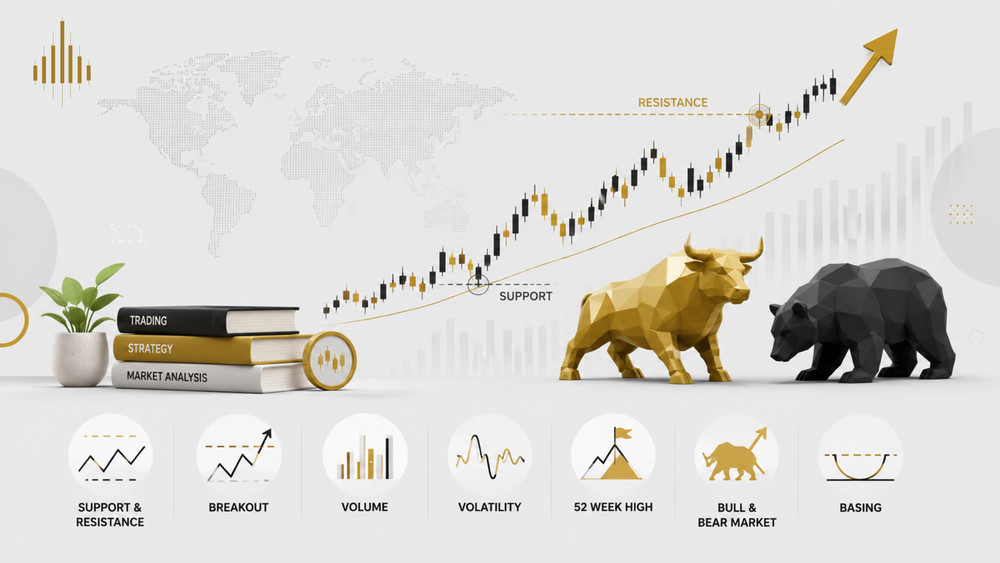
In order to navigate the world of trading, you should be aware of certain terms and topics that you are bound to come across sooner or later. Understanding these concepts will make it much easier for beginners to follow market trends and make informed decisions.
Trading Terms Everyone Must Know
Support & Resistance
The Support and Resistance points are specific price points on a chart expected to attract the maximum amount of either buying or selling.
Resistance is a price level where selling pressure exceeds demand. When the price approaches this level, many traders choose to sell, preventing further upward movement of price.
Support, on the other hand, is a price level below the current market price that prevents the price from falling further.
Breakout
A Breakout is a momentum-based strategy where the price level moves above the Resistance point or below the Support point, indicating the beginning of a new trend. Breakouts are typically accompanied by an increase in trading volume.
Volume
Trading volume refers to the total number of shares actively traded in the market during a given period of time. An increase in trading volume means strong participation and interest from market participants, and typically indicates a confirmation of the ongoing trend, while a decrease in volume indicates a trend reversal.
Volatility
Volatility represents the degree and speed of change of an assets price. A highly volatile market faces larger price swings, whereas a market with low volatility moves more steadily.
52 Week High
A 52 Week High represents the peak price of a stock over the past year. Traders closely monitor this price to identify breakout opportunities. It acts as a resistance level, and when the stock price breaks above this high, traders often buy assuming the price will continue to rise.
Bull & Bear Market
A Bull Market indicates a trend of rising prices in the market, whereas a Bear Market represents a trend of declining prices in the market. Bull markets are often driven by confidence and economic growth, and Bear markets are driven by fear and economic slowdown.
Basing
Basing occurs when a stock stops falling and begins trading sideways for a while, forming a “base” before possibly moving higher. During this period, buying and selling activity becomes balanced, allowing the stock to stabilize before its next major move.
Stay tuned for The Trading Dictionary: Vol. 2, where we will explore more commonly used trading terms...


