
Futures vs Options: What's the Difference?
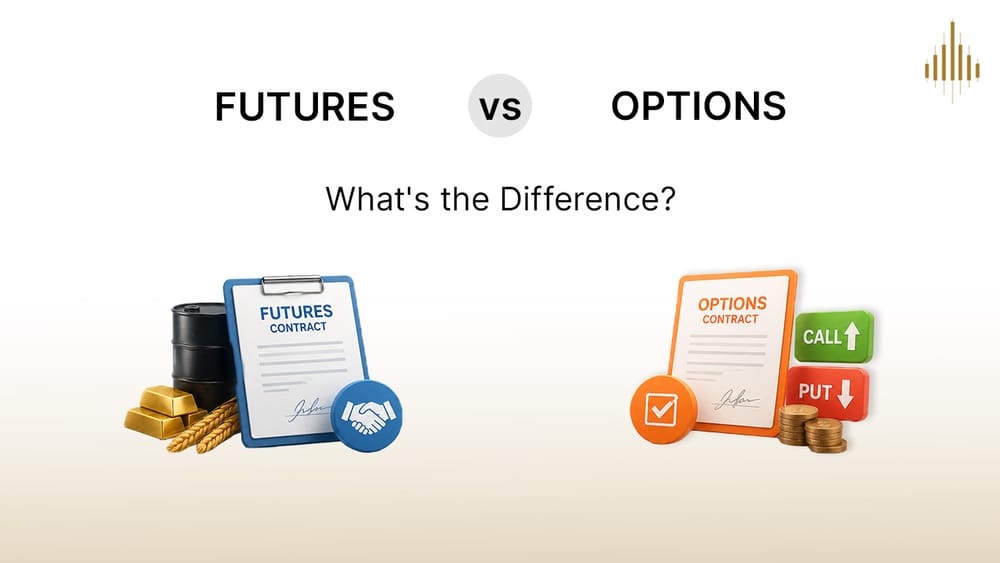
Futures and Options are two of the most commonly traded instruments in the derivatives market, used for hedging and speculation. Before exploring more about Futures and Options, it's important to understand derivatives.
A derivative is a financial contract whose value is based on an underlying asset such as stocks, commodities, currencies, etc. So instead of owning the asset directly, contracts are formed between traders based on the asset's price movements.
Understanding Futures vs Options Using a Simple Example
Imagine a mango seller and buyer discussing the prices of mangoes. Today, a mango costs ₹10. The buyer tells the seller:
"Three days from now, I will buy 10 mangoes from you for ₹10 each." The seller agrees.
This situation is similar to a futures contract. Irrespective of the price changes, the deal must be fulfilled. If the mango price rises to ₹15, the buyer will earn a profit of ₹5 per mango. If the price falls to ₹5, the buyer still has to buy at ₹10 and faces a loss.
Now imagine a slightly different deal. The buyer says:
"I might buy 10 mangoes from you in 3 days for ₹10 each. But I'll pay you ₹1 today for this option."
This ₹1 is called the option premium, which is the price paid to obtain the option. In this case, the buyer has a choice:
If the mango price rises to ₹15, the buyer can choose to purchase the mangoes at ₹10 each and profit from the difference. If the price falls to ₹5, the buyer can simply walk away from the deal and lose only the ₹1 option premium.
Simply put: Futures are a promise to buy or sell in the future, while Options give you the choice to do so.
While futures and options offer powerful tools for managing market exposure, they also carry significant risks that every trader should be aware of.
1) Leverage risk: These contracts allow investors to control large trade volumes using relatively small capital. While this can increase profits, it can also amplify losses.
2) Market Volatility: Sudden market movements due to economic events or global news can lead to rapid gains or losses.
3) Margin Requirements: Futures traders must maintain margin accounts. If the market moves against them, they may need to add more funds.
4) Time Decay: Options lose value as they approach their expiry date, especially if the market does not move as expected.
Conclusion
Both futures and options are integral instruments in the modern financial markets, each serving distinct purposes depending on a trader’s goal and risk appetite. Futures are better suited for those who are confident in their market outlook and are prepared to commit to the trade regardless of how prices move. Options, on the other hand, are ideal for those who want market exposure while keeping their downside limited to the premium paid. Understanding these differences is the first step toward making informed decisions in the derivatives market.


