
The “Don’t Put All Your Eggs in One Basket” Rule: What It Really Means
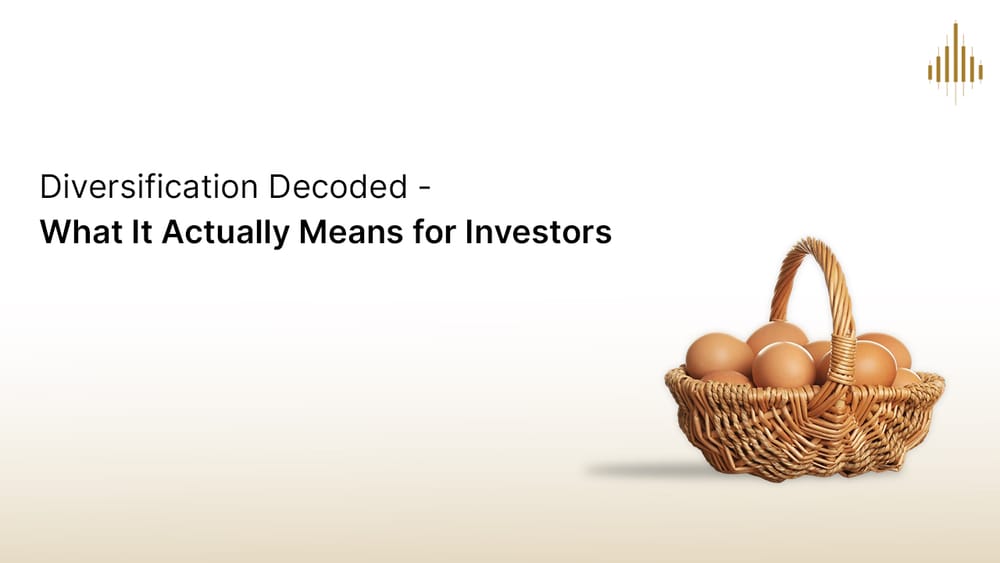
You’ve heard the saying before. Probably from a parent, even that one financial podcast you didn’t finish, or maybe that one friend who seems to have a quote for everything.
The Old Story That Still Works
You’re walking home from the market with all your eggs in one basket. You trip, the basket hits the ground, and… well, omelette.
Now imagine splitting those eggs between two or three baskets. You might drop one, but the others make it home safe.
That’s the logic investors have lived by for decades: don’t rely on one thing to carry all your hopes. Because if it breaks, everything breaks.
What It Means in Investing
In money terms, your “eggs” are your investments: the stocks, funds, property, gold, or whatever else you’ve chosen.
The “basket” is the type of asset you put them in.
If you pour all your savings into a single stock or one type of investment, you’re betting your future on its success.
And markets don’t care about our confidence. Prices move. Economies shift. Companies make mistakes.
Diversification – spreading money around – is your safety net. It won’t stop things from falling, but it will stop everything from falling together.
Why It Matters
When you’re diversified, one bad day in one stock doesn’t wreck your mood or your portfolio. Something else in your mix might be steady or even rising.
That balance keeps your money in check.
How to Actually Do It
Diversifying sounds big, but it’s mostly common sense. Here’s how most experienced investors look at it:
- Different asset types.
A mix of equity, debt, gold, and maybe a bit of real estate if it fits. Each reacts differently to market moods. - Different sectors.
If you like stocks, don’t just pick all tech or all banking. A small variety spreads the risk. - Different time horizons.
Keep some investments you can touch in a few months; leave others alone for years. - Different risk levels.
A little that’s aggressive, a little that’s safe. Balance speed with stability.
It’s less about fancy formulas and more about not betting everything on one idea.
The Balance Part People Miss
Keep it simple enough to manage.
You don’t need fifty different stocks or ten mutual funds.
A handful of solid, researched options in a few categories is usually enough for most people.
When People Forget This Rule
It usually happens in good times. A stock’s rising, everyone’s talking about it, and suddenly you think, “Maybe I should just go all in.”
Diversification isn’t exciting when markets are calm. It feels boring. But when things go wrong, it’s the only thing standing between a small setback and a big loss.
What We’ve Seen at 021 Trade
At 021 Trade, we meet traders and investors every day.
Some come in chasing one big winner.
Others take time to build a balanced plan.
That’s why we build tools that help users spot imbalances, early alerts for margins, and checks for risks, all meant to protect you before mistakes happen.
Fast execution is great, but protection matters more.
Don’t Overthink It
The goal isn’t perfection.
You’ll never have a portfolio that’s 100% “right”.
You just need one that can survive a few rough patches without breaking.
That’s all “don’t put all your eggs in one basket” really means: be ready for surprises, good or bad.
And most importantly, remember: it’s not about having the perfect basket; it’s about having more than one.
Disclaimer
The information provided in this article is for educational and informational purposes only and should not be considered as investment advice or a recommendation to buy or sell any financial instruments. Stock market investments are subject to market risks, and past performance does not guarantee future returns. While we strive to ensure the accuracy of information shared, 021 Trade makes no warranties or representations regarding its completeness or reliability. By using our platform or reading our content, you agree that 021 Trade is not liable for any loss or damage arising directly or indirectly from your investment actions.


