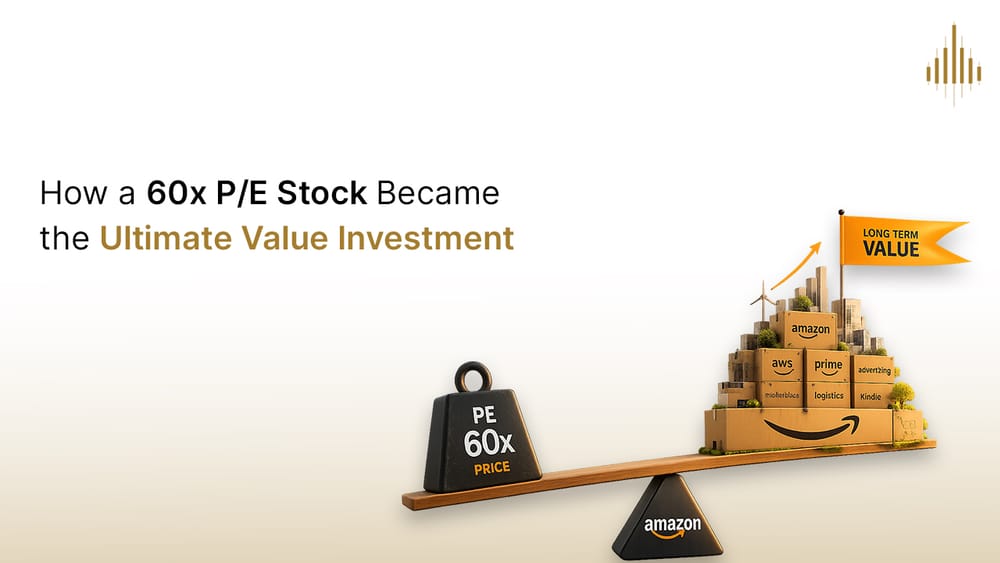
The do-nothing price: how Amazon with a PE of 60x became a value investment
PE ratios are probably the most abused tool in investing. Aggressive investors project them decades into the future, slap on wild growth assumptions, and use them to justify buying companies with no earnings. Or no revenue at all.
The real work is in doing the opposite. Take historical financials, apply cautious assumptions to remove the noise, and see what the numbers actually say.
Nick Sleep is an investor I’ve learned a lot from. He studied geography at Edinburgh, briefly worked in landscaping, then stumbled into investing after reading a book about investment trusts. He went on to run the Nomad Investment Partnership from 2001 to 2014 generating 18% USD returns after fees. His greatest investment was Amazon. Not the obvious pick for a value investor.
Sleep didn't use a Price to Earnings (PE) multiple. That was the point. Amazon was suppressing earnings by reinvesting in growth with initiatives such as R&D, next day free delivery, marketing, and price reductions. He recognised a flywheel pattern he called Scale Economies Shared, wherein Amazon would reinvest profits to keep prices low and the customer experience high, which would then drive more volumes, which would then allow costs to be reduced further, generating more profits.
As a result, a PE on reported numbers was meaningless.
Instead, he broke the financials apart. Amazon was reporting ~$500 million in free cash flow. But Sleep estimated another ~$500 million was going into discretionary growth spending. If management simply cancelled all of it, the business could produce ~$800 million in after-tax cash flow. Put a conservative 12-13x multiple on that. What would this business be worth if it just stopped growing? About $10 billion, or $26 per share.
The stock actually traded at that level in the second half of 2006. The market was assigning zero value to all of Amazon's growth investments, for a business growing revenues 20%+ per year.
I think of this as the “do-nothing price.” What would the business be worth if management just stopped and coasted? Everything above that, the growth, the reinvestment, the widening moat, you were getting for free.
After closing Nomad in 2014, Sleep had seen it all. He told his partners to hold all their money in three stocks. Amazon, Costco, and Berkshire Hathaway. For the next ten years. The investment cases were intact, and he believed most alternatives would underperform simply staying put.
The Amazon holding alone grew 8-10x after the fund closed. The other two continue to be multibaggers as well. Sleep spent the time riding motorcycles across the world and doing philanthropy, and is likely a billionaire today.


