
Oversubscription Measures Demand, Not Returns
In 2025, India's biggest IPO year, demand soared but returns didn't: nearly half of all listed IPOs ended up trading below their issue price. Here's why oversubscription numbers measure hype, not value, and the three questions that matter more than any subscription multiple before you apply.
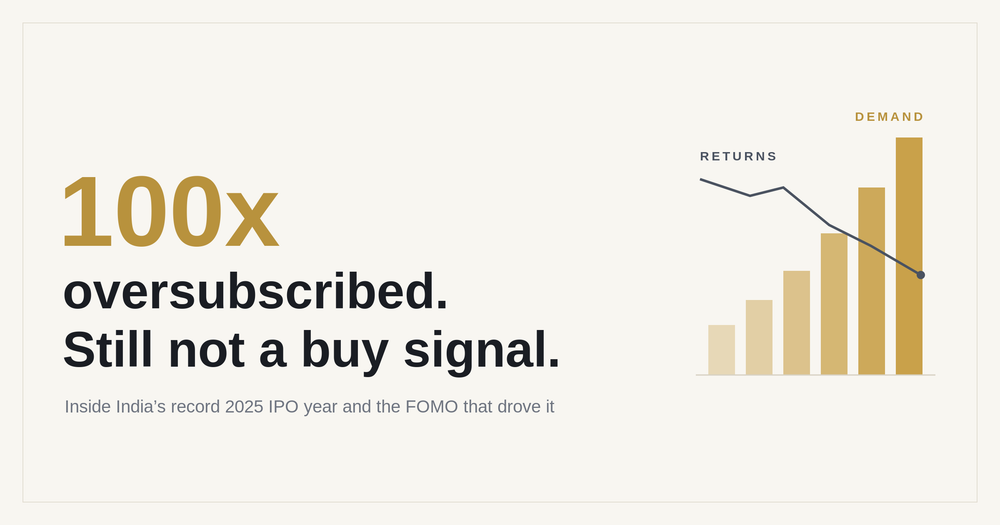
"This IPO is oversubscribed 100 times."
For many investors, that one line is the entire research process. A few headlines, a few WhatsApp forwards, a subscription counter climbing by the hour, and thousands of applications go in, each one convinced this is the next multibagger.
Here is the problem: oversubscription measures demand, not future returns. When investors confuse the two, FOMO does the rest.
How IPO FOMO works
FOMO - the fear of missing out - is the anxiety that others are profiting from an opportunity you are about to miss. In the IPO market, it follows a predictable pattern: heavy media coverage, subscription numbers climbing rapidly, and social media full of listing-gain screenshots.
At that point, the question quietly changes. Investors stop asking "what is this company worth?" and start asking "what is everyone else doing?" The second question feels like research. It is not.
2025: the test case
If demand predicted returns, 2025, India's biggest IPO year, should have been exceptional for investors. It was not.
NSE IPO data for 2025 shows 103 companies launched IPOs on the main exchanges, and more than 60 of them were oversubscribed over 10 times. Despite that demand, average listing gains fell to around 10%, well below what investors had come to expect from earlier years.
The more important number came later. By December 2025, 48 of the 102 IPOs that had listed were trading below their issue price. Nearly half the issues that drew massive subscription interest left their applicants holding shares worth less than what they paid.
The demand itself is not what it looks like
There is a second layer to this, and SEBI has measured it. SEBI's September 2024 study of 144 IPOs listed between April 2021 and December 2023 found:
- 54% of shares allotted to investors (excluding anchor investors) were sold within one week of listing.
- Individual investors sold about 70% of their allotted value within a year.
- When an IPO rose more than 20% after listing, individuals sold 67.6% of their shares within a week. When it fell, only 23.3% sold.
Read those numbers together and the oversubscription figure changes meaning. A large share of that "demand" is not conviction in the business; it is applicants planning to flip the listing pop. The crowd you are afraid of missing out on is, in large part, planning to sell to you on day one. And the disposition effect, dumping winners fast, clinging to losers, is the opposite of disciplined investing.
The bottom line
An oversubscribed IPO is not necessarily a good investment. Before applying, three questions do more work than any subscription number:
- Is the business strong?
- Is the valuation reasonable?
- Would you buy this stock after listing, at this price, with no allotment lottery attached?
If the answer to the third question is no, the first two were never really yes.
FOMO may get you into an IPO. Fundamentals decide whether you should still be there when the excitement fades.
Investments in securities are subject to market risks. This is educational content, not investment advice.
References


